
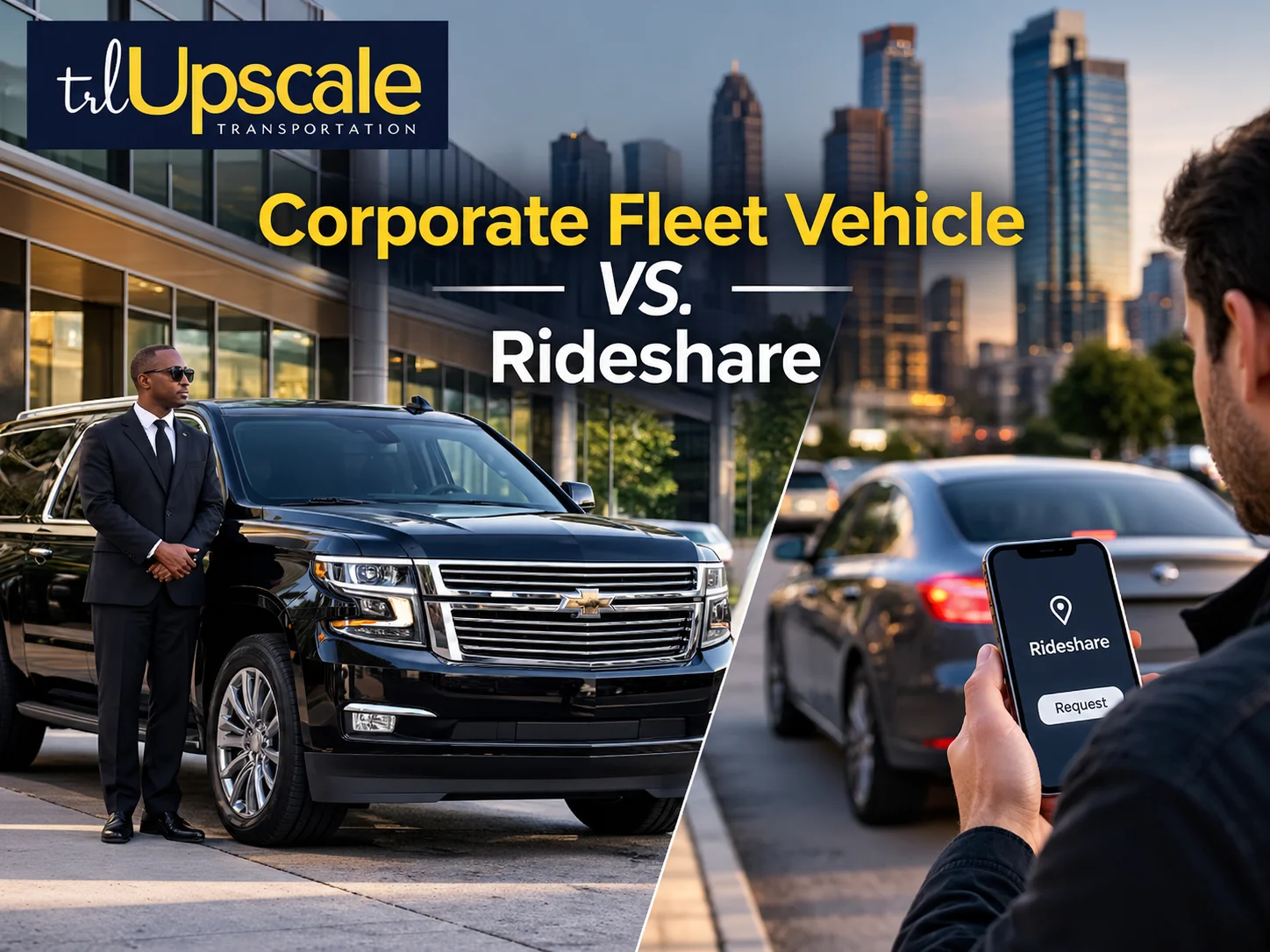
Two primary contenders consistently dominate this corporate discussion leveraging a dedicated corporate fleet vehicle or utilizing on demand rideshare applications. Although both options offer unique advantages, weighing their long term value, reliability, and security is essential before making a definitive choice.
Business travel has changed dramatically over the last decade. Yesterday’s corporations relied entirely on traditional taxi fleets or rigid rental car contracts. Today, professionals have immediate access to smartphone apps that summon a car within minutes, alongside high end chauffeured fleets designed specifically for executive convenience. Because workplace expectations have shifted toward efficiency and comfort, managers must look closely at their bottom line. However, financial cost is only one piece of a much larger puzzle. Safety, brand image, punctuality, and administrative overhead also play massive roles in determining which choice truly wins the daily commute.
A corporate fleet vehicle offers a level of control and consistency that on-demand platforms simply cannot match. When an enterprise invests in a dedicated fleet or partners with professional corporate transportation providers every ride becomes standardized.
Rideshare applications revolutionized urban mobility by offering incredible convenience at a tap of a screen. For spontaneous short trips across town, they are undeniably popular. However, scaling rideshares for everyday corporate use introduces distinct vulnerabilities.
At first glance, rideshares appear cheaper for occasional errands. Yet, analyzing the total cost of ownership or enterprise level contracted transport reveals a different story. When employees rely heavily on rideshares, fluctuating rates complicate monthly expense reporting. Conversely, partnering with an TRL UpScale Transportation provider or maintaining a structured fleet allows finance departments to forecast travel expenditures accurately. Furthermore, avoiding missed meetings and delayed flights preserves valuable corporate revenue, tilting the economic scale toward dependable transportation solutions.
Modern executives rarely sit idly during a commute. They use transit time to finalize presentations, reply to critical emails, or conduct phone conferences. A rideshare backseat can often feel cramped, noisy, or ill-suited for deep focus. In contrast, premium corporate transport options feature spacious, quiet interiors equipped with Wi-Fi connectivity and charging ports. Consequently, traveling in a dedicated vehicle transforms wasted commute time into productive office hours, directly boosting overall workplace efficiency.
Risk management is a top priority for corporate governance. When an employee steps into a vehicle on company business, the employer holds a vested interest in their safety. Professional transport services maintain rigorous vehicle maintenance schedules, comprehensive commercial insurance policies, and thorough background checks for every driver. Rideshare companies, while regulated, operate on decentralized contractor models where vehicle upkeep can vary wildly from one driver to the next. For risk-averse organizations, choosing a structured fleet or executive black car service minimizes liability and ensures peace of mind.
Choosing between a rideshare and a dedicated corporate fleet vehicle ultimately depends on your company’s specific operational needs. If your team occasionally needs quick, casual cross town hops during off peak hours, rideshares can certainly fill a gap. However, when consistent punctuality, executive comfort, data privacy, and a polished corporate image matter most, a dedicated corporate fleet vehicle clearly wins the competition. By prioritizing reliability and professional standards, businesses can empower their teams to travel smarter, safer, and with absolute confidence.