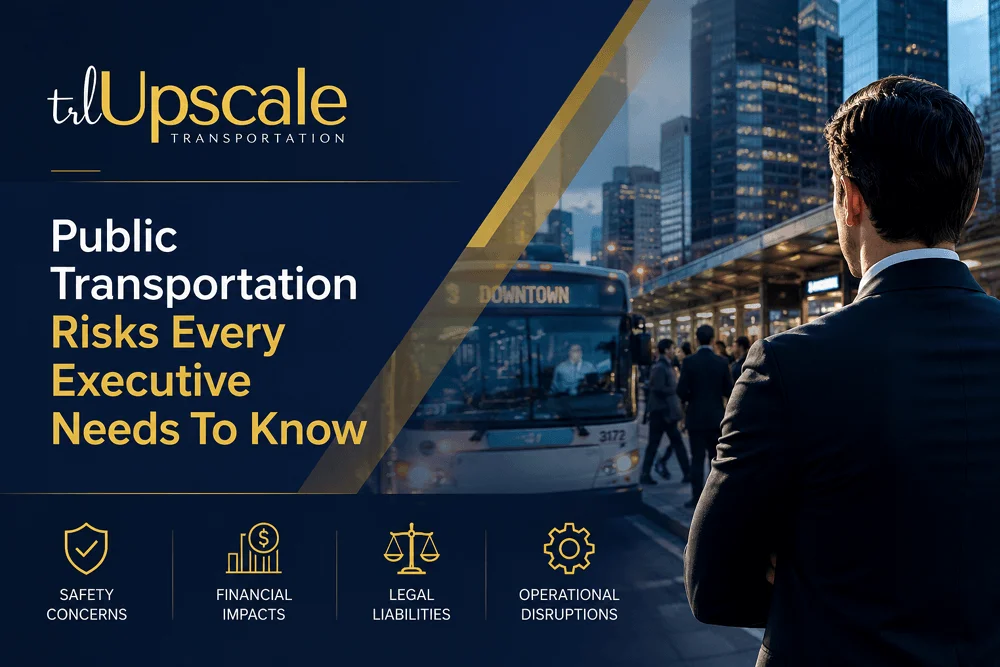
Public Transportation Risks Every Executive Needs To Know

Business travel is experiencing strong growth as organizations continue investing in in-person meetings, conferences, client visits, and strategic partnerships. According to recent corporate travel research, a large percentage of travel managers expect business travel spending to increase as companies place greater value on face-to-face engagement and relationship building. At the same time, executives are traveling more frequently across cities, states, and countries, increasing their exposure to transportation-related risks.
Public Transportation Risks

Transportation has become one of the most overlooked areas of executive security. Many organizations invest heavily in cybersecurity, office security, and event protection while paying less attention to what happens between destinations. The reality is that executives spend a significant amount of time moving through airports, public transit systems, rideshare pickups, parking facilities, and unfamiliar urban environments. Every transfer point creates an opportunity for delays, theft, surveillance, or personal security incidents.

Security experts consistently identify transportation transitions as one of the most vulnerable stages of executive travel. Airports, train stations, bus terminals, and crowded transit hubs place high profile travelers in environments with limited control and visibility. A business leader may have a secure office and a protected hotel, yet still face substantial risks during the journey between those locations. This is why Executive Safety Transport has evolved from a luxury service into a critical business necessity.

For executives carrying confidential information, representing major brands, or negotiating high value deals, transportation security is no longer just about convenience. It is about protecting people, assets, information, and business continuity. Organizations that fail to address transportation risks often discover vulnerabilities only after an incident occurs, which can result in financial losses, reputational damage, and potential legal consequences.

Understanding Modern Corporate Travel Risk Management

Corporate Travel Risk Management is the process of identifying, evaluating, and reducing risks associated with business travel. While many people assume travel risk management focuses only on international travel, today’s corporate environment requires risk assessments for domestic travel as well. Security professionals evaluate destinations, transportation methods, local conditions, schedules, and individual executive profiles before approving travel plans.

A key component of travel risk management is the concept of Duty of Care Corporate Travel. Duty of care refers to an employer’s responsibility to take reasonable steps to protect employees while they are performing work related activities. This responsibility extends beyond office walls and includes transportation arrangements, accommodations, and emergency response planning. Experts in corporate travel safety emphasize that companies must proactively prepare for disruptions and security incidents rather than simply react when problems arise.

Modern travel risk programs incorporate multiple layers of protection. These include destination intelligence, route planning, communication protocols, emergency contact procedures, transportation provider vetting, and contingency planning. Organizations are increasingly adopting internationally recognized travel risk frameworks to strengthen compliance and protect executives during business travel.
The importance of these measures becomes clear when considering the wide range of risks executives face today. Political demonstrations, transportation disruptions, cyber threats, organized crime, civil unrest, and even natural disasters can affect travel plans without warning. Effective travel risk management ensures that executives can focus on business objectives while trained professionals handle security considerations in the background.

Major Risks Associated With Public Transportation for Executives

Personal Security Threats

Public transportation systems are designed for accessibility and efficiency, not personalized security. Executives using trains, buses, subways, or crowded transit terminals often become exposed to unpredictable environments where situational control is limited. Crowded platforms, long wait times, and publicly visible schedules can create opportunities for unwanted attention, harassment, or targeted criminal activity.

High profile executives face unique concerns because their visibility may attract individuals seeking financial gain, publicity, or sensitive information. Security specialists note that transportation hubs often present challenges because travelers move through multiple public spaces where screening and monitoring may vary significantly.

Theft and Sensitive Data Exposure

Executives frequently travel with laptops, smartphones, confidential documents, and business materials. Public transportation environments increase the likelihood of theft, accidental information exposure, or unauthorized observation. Something as simple as reviewing confidential presentations on a crowded train can expose sensitive information to nearby passengers.

Data security risks extend beyond physical theft. Public Wi-Fi networks, shoulder surfing, and unsecured charging stations can all create vulnerabilities. While companies invest millions in cybersecurity systems, sensitive information can still be compromised during routine transit if executives lack secure transportation options.

Delays and Productivity Loss
Time is one of the most valuable assets for senior leaders. Public transportation systems, despite their benefits, remain vulnerable to delays caused by weather, maintenance issues, congestion, labor disruptions, and operational challenges. Missed meetings, delayed presentations, and disrupted schedules can create substantial financial consequences.
Recent transportation industry reports highlight ongoing operational challenges affecting transit systems. Even when safety improvements are implemented, delays and service interruptions remain common concerns for business travelers.
Reputational and Corporate Risks

An executive represents more than an individual traveler. They represent a company, a brand, and often shareholder interests. Transportation related incidents can quickly become public relations issues. Lost devices, public confrontations, travel disruptions, or security incidents may attract media attention and damage stakeholder confidence.

For organizations operating in competitive industries, even minor disruptions can impact negotiations, investor relationships, and customer trust. This is why transportation decisions increasingly receive attention at the executive and board levels.
Executive Protection in Transit
Executive protection in transit focuses on safeguarding leaders while they move between destinations. Unlike traditional security approaches that emphasize fixed locations, transit protection addresses the dynamic nature of travel. Security teams evaluate routes, transportation methods, timing, and potential threat environments before travel begins.
Professional travel risk assessments examine factors such as crime trends, transportation reliability, political conditions, weather forecasts, and emergency response capabilities. Security experts often prepare detailed travel briefs that include primary routes, alternative routes, emergency contacts, and contingency plans.
A comprehensive Business Travel Security Risk Assessment also considers the executive’s public profile. A CEO announcing a major acquisition may face different risks than a regional sales executive attending a conference. Customized assessments ensure security resources align with actual threat levels rather than generic assumptions.
The most effective protection strategies combine preparation, communication, technology, and professional transportation support. Rather than relying on reactive measures, organizations focus on reducing exposure before problems occur. This proactive approach minimizes disruptions while maintaining executive productivity.

Private Executive Car Service vs Public Transit

The debate between Private Executive Car Service vs Public Transit ultimately comes down to control, security, reliability, and privacy.

Responsive Transportation Table
Factor Public Transit Private Executive Car Service
Security Control Limited High
Privacy Low High
Schedule Flexibility Fixed Customized
Route Planning Standard Optimized
Productivity Limited High
Risk Exposure Higher Lower
Public transit serves millions of passengers effectively every day. However, executives often require a different level of service due to their responsibilities and exposure levels. Private executive transportation creates a controlled environment where schedules, routes, and security considerations can be managed proactively.
Privacy is another major advantage. Executives frequently conduct phone calls, review contracts, prepare presentations, and discuss sensitive matters while traveling. A private vehicle allows productive use of travel time without concerns about eavesdropping or information exposure.
Reliability also plays a critical role. Chauffeur services monitor traffic conditions, adjust routes, coordinate arrivals, and maintain direct communication with clients. This level of operational support significantly reduces uncertainty and improves overall travel efficiency.

Benefits of Corporate Executive Chauffeur Services

If you’ve missed the early booking window, three to six months before your match a Corporate Executive Chauffeur Services provide far more than transportation. They deliver a complete mobility solution designed around executive needs. Professional chauffeurs receive specialized training in customer service, route management, situational awareness, and operational discretion. remains a relatively safe period for reservations. Many transportation providers still maintain availability, though premium options may begin filling quickly.

One of the biggest advantages is environmental control. Executives travel in vehicles that offer privacy, comfort, and security. Meetings can continue uninterrupted, calls can be conducted confidentially, and work can proceed without distractions. This transforms transportation time into productive business time.
Professional chauffeur services also use advanced route planning techniques. Drivers monitor traffic conditions, road closures, local events, and potential disruptions in real time. Alternative routes are prepared in advance to maintain schedules and avoid unnecessary delays.
Many executive transportation providers incorporate additional safety measures such as GPS tracking, trip monitoring, vetted drivers, vehicle inspections, and emergency response protocols. These capabilities support broader Corporate Travel Risk Management objectives while enhancing the traveler experience.

Executive Transportation Service for Airport Transfers

Airport transportation represents one of the most important components of executive travel. Airports combine high passenger volumes, complex logistics, security procedures, and tight schedules. Coordinating seamless transfers requires experience and careful planning.

For organizations operating in Georgia, Atlanta transportation airport to Mercedes Benz Stadium, downtown business districts, convention centers, and corporate offices remains a common requirement. Executives attending conferences, client meetings, sporting events, and corporate functions often require dependable transportation between airports and key destinations.

An experienced executive transportation service eliminates uncertainty by providing pre-arranged pickups, flight monitoring, route optimization, and professional chauffeur support. Instead of navigating unfamiliar transit systems or waiting for rideshare availability, executives can transition directly from airport arrival to their next business engagement.
The result is greater efficiency, reduced stress, and improved security throughout the travel experience.

Building a Strong Executive Safety Transport Strategy

Organizations seeking to improve executive travel security should begin by establishing clear transportation policies. These policies should define approved transportation providers, risk assessment procedures, communication protocols, and escalation processes for emergencies.
Technology also plays a critical role. GPS monitoring, mobile communication platforms, travel alerts, and real-time risk intelligence help organizations maintain visibility throughout executive travel. Combined with trained personnel and professional transportation partners, these tools create a comprehensive safety framework.
Regular reviews are equally important. Travel patterns change, threats evolve, and business priorities shift. Continuous assessment ensures transportation strategies remain effective and aligned with organizational objectives.
Companies should also educate executives about transportation risks. Awareness training helps travelers recognize potential threats, follow security protocols, and make informed decisions while on the move.

Why Companies Are Investing in Premium Transportation Partners

As executive travel becomes more complex, organizations increasingly partner with specialized transportation providers. Premium providers combine luxury, reliability, safety, and operational expertise to deliver a superior travel experience.
Companies recognize that transportation is not simply a logistical function. It is an extension of executive protection, brand reputation, and business continuity planning. The cost of a professional transportation solution is often insignificant compared to the potential impact of a serious travel disruption.

Providers such as TRL Upscale Transportation focus on delivering professional executive mobility solutions that align with modern corporate expectations. By integrating experienced chauffeurs, premium vehicles, and customer focused service, specialized transportation companies help organizations reduce risk while enhancing executive productivity.

Conclusion

Public transportation remains an essential part of modern infrastructure, but it presents unique challenges for corporate leaders. Executives face risks related to personal security, information protection, schedule reliability, and organizational reputation. As business travel continues to expand, companies must adopt a more strategic approach to transportation planning.

Effective Executive Safety Transport, robust Corporate Travel Risk Management, and professional Corporate Executive Chauffeur Services help organizations fulfill their duty of care responsibilities while supporting business objectives. By combining risk assessments, secure transportation options, and proactive planning, companies can protect their most valuable asset the people driving the organization forward.

Frequently Asked Questions

Executive transportation involves exposure to public environments, schedule vulnerabilities, and information security risks. Transportation is often one of the most vulnerable stages of executive travel.
Duty of care refers to an employer’s responsibility to take reasonable steps to protect employees during work-related travel, including transportation arrangements and emergency planning.
Professional chauffeur services generally provide greater privacy, route control, reliability, and security compared to public transportation options.
Assessments typically review destination risks, transportation methods, crime trends, executive profiles, emergency procedures, and route planning.
Organizations can improve safety through risk assessments, approved transportation providers, executive training, communication protocols, and professional executive transportation services.

Book Your Luxury Transportation Today!

At TRL Upscale Transportation, we provide top-tier premium services for business travel, weddings, airport transfers, special events, and more. Book your luxury ride in Atlanta & Newnan** today!
Call Now:

404-734-6432

Visit:

trlupscaletransport.com